Manufacturing Companies
The R&D Tax Credit Explained
The Research & Development (R&D) Tax Credit is a federal incentive that rewards manufacturers for innovation, efficiency improvements, and problem-solving in the production process. Despite the name, “R&D” doesn’t just mean lab coats and scientists — it includes everyday engineering, prototyping, and process enhancements in manufacturing operations.
If your manufacturing company develops or improves products, processes, techniques, or systems, you likely qualify.
QUALIFYING ACTIVITIES
- Designing or improving manufacturing processes
- Developing prototypes or samples
- Reducing scrap or waste through experimentation
- Improving energy efficiency in production lines
- Developing custom tooling, dies, or fixtures
- Testing alternative materials or components
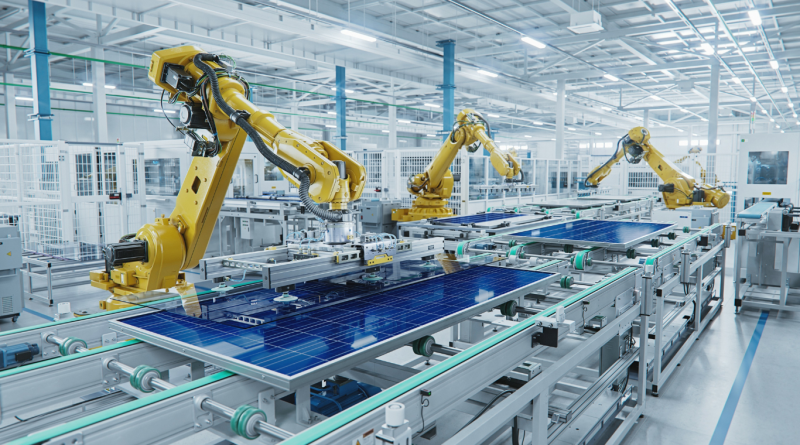
- Automating manual processes using robotics or software
- Engineering compliance with environmental or safety regulations
WHAT cAN BE CLAIMED
Manufacturers can claim:
- Wages for employees involved in design, testing, process engineering, QA, or tooling
- Supplies used in prototypes or test batches (not for sale)
- Contract research (e.g., third-party engineering or testing services)
- Software development (e.g., custom ERP or automation controls)
- Cloud computing expenses related to software development or modeling
WHAT DOESN'T QUALIFY
Certain activities are explicitly excluded:
- Routine QA or inspection (unless tied to experimentation)
- Reverse engineering (without improvements)
- Duplication of existing products
- Market research or consumer testing
- Foreign R&D (outside the U.S.)
- Capital expenditures (e.g., buildings or machines)
HOW THE CREDIt WORKS
The R&D tax credit is a dollar-for-dollar reduction in your federal (and possibly state) tax liability.
If you’re a startup or have minimal income tax liability, you may apply the credit against payroll taxes (up to $500,000 per year).
Unused credits can typically be carried forward for 20 years and backward 1 year.
Average R&D Tax Credit for Manufacturers
Credits vary by size and activity level:
Company Size | Average R&D Credit |
Small manufacturer (1–25 staff) | $25,000–$100,000/year |
Mid-size manufacturer (25–100) | $100,000–$500,000/year |
Large or multi-site operations | $500,000–$2M+/year |
These numbers increase significantly with systematic tracking and proper categorization of qualifying costs.

For Small to Mid-Sized Manufacturers
Even without a formal R&D department, small firms qualify for:
- Testing and tweaking production processes
- Custom fabrication or tooling
- Supplier material trials
- Prototype development and iteration
- Automation enhancements using off-the-shelf or custom software
Often, they underclaim because these activities are seen as “just part of the job.”
For Larger Manufacturers or Multi-Location Operations
Opportunities expand to:
- Dedicated R&D engineering teams or labs
- National-level process standardization and optimization
- In-house automation or robotics development
- Advanced material science research
- Software and system integration
- Environmental innovation or energy-saving initiatives
Proper time tracking, project documentation, and financial systems unlock high-value credits.
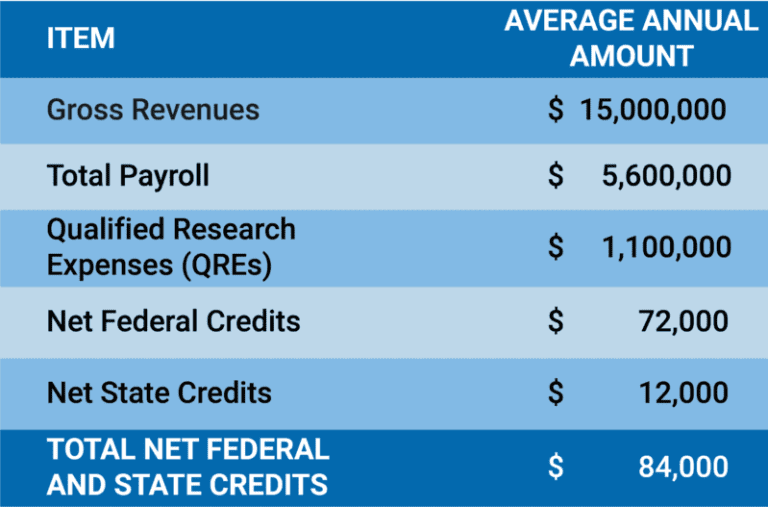
MANUFACTURING CASE STUDY