Graphics & Printing Companies
The R&D Tax Credit Explained
The Research & Development (R&D) Tax Credit is a federal (and often state-level) incentive that rewards U.S. businesses for investing in innovation. For graphics and printing companies, this often means improving print processes, developing custom print solutions, experimenting with materials, or integrating new technology.
Many print and design businesses don’t realize their work qualifies. As long as your activities meet the IRS’s four-part test —
- Permitted purpose (new or improved function, performance, reliability, or quality),
- Technological in nature,
- Eliminate uncertainty, and
- Involve a process of experimentation — you may be eligible for significant tax savings.
Whether you’re optimizing digital workflows, developing custom packaging, or testing new ink-substrate combinations, your daily problem-solving might count as R&D.
QUALIFYING ACTIVITIES
A wide range of technical and design-based work in the graphics and printing industry may qualify as R&D. Examples include:
- Developing or refining custom print processes
- Experimenting with new materials, substrates, or inks
- Improving print durability, clarity, or speed
- Automating prepress or finishing workflows
- Creating or customizing design software plugins or automation tools
- Testing and adjusting UV curing, drying times, or lamination techniques
- Reducing waste through process improvements
- Innovating packaging solutions with new formats, adhesives, or folds
- Color matching and quality assurance improvements using technology
- Integrating digital platforms with physical print systems (e.g., web-to-print)
If your team is regularly testing, tweaking, or building custom solutions, those activities may qualify.

WHAT cAN BE CLAIMED
You can claim Qualified Research Expenses (QREs) across the following categories:
- Wages: Salaries of employees directly involved in R&D—engineers, technicians, product developers, process designers
- Supplies: Raw materials used in testing and prototypes—flooring planks, glues, finish materials
- Contract Research: Outside consultants, labs, or specialists hired to assist in material testing or product design
- Cloud Computing Costs: CAD software, design platforms, or process simulation tools used for R&D purposes
WHAT DOESN'T QUALIFY
Not everything related to product development qualifies. Ineligible activities typically include:
- Routine production printing or repeat jobs without technical uncertainty
- Cosmetic or aesthetic changes with no functional improvement
- Sales, marketing, or graphic design work that doesn’t involve technical experimentation
- Equipment purchases (e.g., buying a new printer — although consumables used in R&D can qualify)
- Training or administrative tasks
- Improvements made solely due to customer preferences (not technical need)
If the outcome is already known, or if the work doesn’t involve a technical challenge, it likely won’t qualify.
HOW THE CREDIt WORKS
The R&D Tax Credit can reduce your federal income tax liability, and in some cases, even your payroll taxes — which is especially useful for startups and small businesses.
Here’s how it works:
- Identify qualifying projects and expenses
- Calculate your Qualified Research Expenses (QREs)
- File IRS Form 6765 as part of your annual tax return
- Apply the credit to reduce taxes owed — or offset payroll taxes (up to $500,000 annually for qualified startups)
Some states also offer their own R&D credits, which can provide additional tax savings. While the rules are technical, the rewards can be substantial — especially for companies investing heavily in innovation.
AVERAGE TAX cREDIT FOR Graphics & Printing Companies
The amount varies depending on scale and innovation intensity. Here’s a general range:
Flooring Company Size | Average Annual Credit |
Small Print or Graphics Firm | $10,000 – $50,000 |
Mid-Sized Printing Operation | $50,000 – $250,000 |
Large or Multi-Facility Company | $250,000 – $1Million + |
Companies engaging in regular product development, material testing, or equipment upgrades tend to earn the highest credits
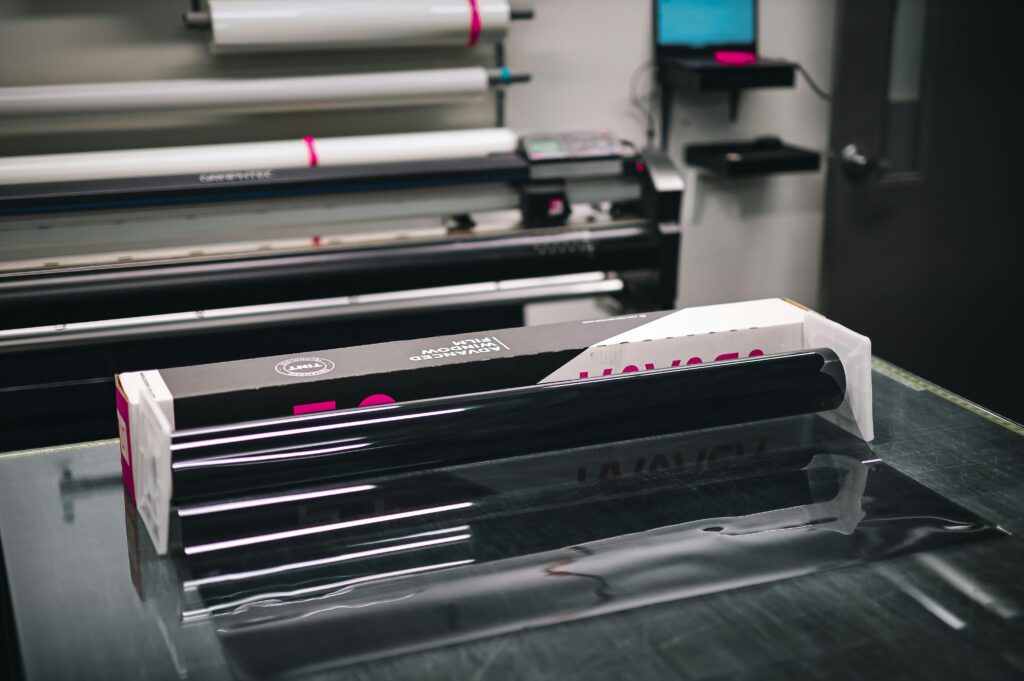
Small Graphics & Printing Companies
(Typically under 25 employees, independent shops, or niche design/print services)
Smaller graphics and printing companies often overlook their eligibility for the R&D Tax Credit. But if your team is solving problems, testing new ideas, or customizing solutions, you may already be performing qualified R&D. Activities that often count include:
- Developing or refining custom print processes for clients
- Experimenting with new inks, coatings, or substrates
- Improving print durability, speed, or clarity through process tweaks
- Automating steps in the prepress or finishing workflow
- Customizing design tools, plugins, or scripts to optimize output
- Testing drying, UV curing, or lamination settings for specific jobs
Even if you’re not running formal “R&D projects,” iterative problem-solving and testing often qualify. Many small businesses use the credit to offset payroll taxes — up to $500,000/year if you qualify as a startup.
Large or Multi-Facility Printing Operations
(Typically 100+ employees or divisions across multiple sites)
Larger printing and packaging operations tend to have more structured innovation efforts — and significantly higher R&D expenditures. These companies often maintain teams focused on:
- Scaling new print technologies across product lines
- Developing proprietary substrates, adhesives, or packaging formats
- Integrating web-to-print systems or custom ordering platforms
- Automating and optimizing post-processing and finishing workflows
- Building internal software tools for prepress, color management, or QA
- Testing eco-friendly materials or waste-reduction methods at scale
With formal R&D departments, internal labs, and robust documentation systems, large firms often identify hundreds of thousands to millions in Qualified Research Expenses (QREs) annually.